
Blog
How to Prevent Thread Breaks During Machine Embroidery

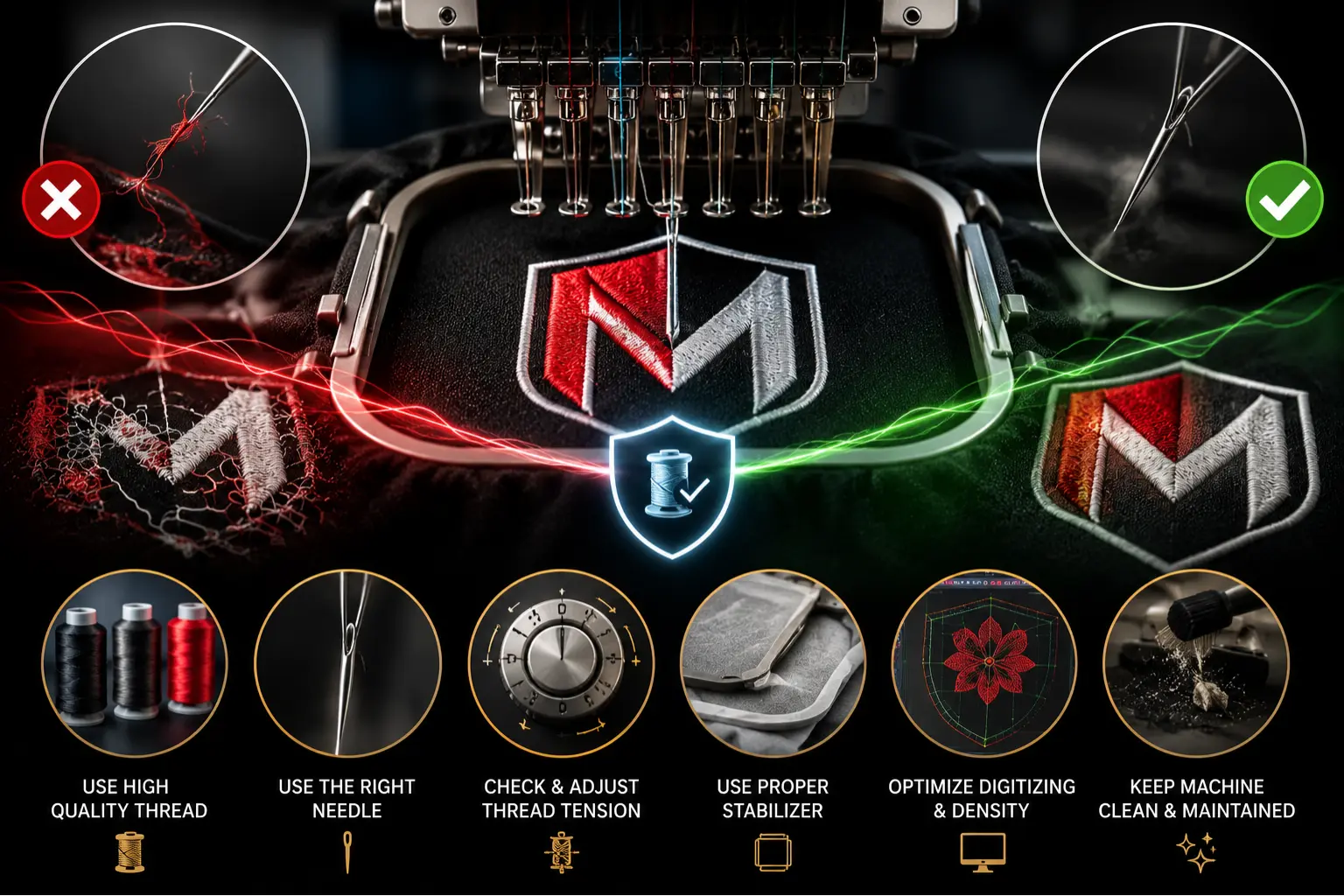
Thread breaks are among the most common and frustrating problems in machine embroidery. Whether you’re embroidering company logos, custom apparel, promotional products, or large production runs, repeated thread breaks can significantly slow down production, reduce embroidery quality, and increase operating costs.
A single thread break may seem minor, but when breaks occur repeatedly, they can lead to machine downtime, misaligned designs, inconsistent stitching, and wasted materials. Fortunately, most thread break issues can be prevented by understanding their causes and implementing proper embroidery practices.
In this comprehensive guide, we’ll explore the most common causes of thread breaks and provide proven solutions to help you achieve smoother, faster, and more reliable embroidery production.
Why Thread Breaks Matter in Machine Embroidery
Thread breaks affect more than just production speed.
Frequent thread breaks can cause:
- Machine downtime
- Production delays
- Increased labor costs
- Poor embroidery quality
- Design inconsistencies
- Needle damage
- Lost production efficiency
- Customer dissatisfaction
For commercial embroidery businesses, minimizing thread breaks is essential for maintaining profitability and delivering professional results.
Understanding Why Embroidery Thread Breaks
Embroidery thread moves through several machine components before reaching the fabric.
It passes through:
- Thread spool
- Thread guides
- Tension discs
- Take-up lever
- Needle eye
- Fabric
A problem anywhere along this path can cause thread breakage.
Identifying the root cause is the first step toward preventing future issues.
Use High-Quality Embroidery Thread
One of the most common causes of thread breaks is poor-quality thread.
Low-quality thread often contains:
- Weak fibers
- Inconsistent thickness
- Manufacturing defects
- Excessive lint
These issues increase the likelihood of breakage during embroidery.
Benefits of Premium Embroidery Thread
High-quality thread provides:
- Greater strength
- Consistent performance
- Better color retention
- Reduced lint buildup
- Smoother machine operation
Investing in quality thread often saves money by reducing production interruptions.
Check Thread Tension Settings
Incorrect thread tension is a leading cause of thread breaks.
Excessive Upper Tension
When upper thread tension is too tight, the thread experiences excessive stress and may snap during stitching.
Signs include:
- Frequent thread breaks
- Tight stitches
- Thread shredding
- Uneven embroidery
Insufficient Tension
While loose tension may not directly cause breaks, it can create loops and tangles that eventually result in thread failure.
How to Optimize Tension
Regularly test embroidery samples and adjust tension settings according to:
- Thread type
- Fabric type
- Design complexity
- Machine specifications
Balanced tension is essential for smooth embroidery operation.
Replace Needles Regularly
Embroidery needles wear out over time.
A worn or damaged needle can:
- Fray thread
- Cut thread
- Create inconsistent stitches
- Increase thread breaks
Many embroiderers underestimate the impact of needle condition on embroidery performance.
Signs of a Worn Needle
- Frequent thread breaks
- Popping sounds during stitching
- Skipped stitches
- Fabric damage
As a general rule, replace embroidery needles after every major project or approximately every 8–12 hours of production.
Use the Correct Needle Type
Different embroidery applications require different needle styles.
Using the wrong needle can increase friction and cause thread breakage.
Common Embroidery Needle Types
Sharp Needles
Best for:
- Woven fabrics
- Stable materials
Ballpoint Needles
Best for:
- Knit fabrics
- Stretch materials
Titanium Needles
Best for:
- High-volume production
- Heavy-duty embroidery
Selecting the appropriate needle improves stitch quality and reduces thread stress.
Keep the Machine Clean
Lint buildup is a major contributor to thread break problems.
Embroidery thread naturally sheds small fibers during production.
Over time, lint accumulates around:
- Bobbin area
- Rotary hook
- Thread guides
- Tension assemblies
This buildup creates friction that can cause thread to snap.
Daily Cleaning Checklist
Clean:
- Bobbin case
- Hook assembly
- Needle area
- Thread paths
- Tension discs
Regular maintenance significantly improves machine performance.
Monitor Thread Path Obstructions
Thread should move smoothly from the spool to the needle.
Any obstruction can create unnecessary tension and lead to breaks.
Common causes include:
- Damaged thread guides
- Burrs on metal surfaces
- Incorrect threading
- Thread catching on spool edges
Regularly inspect the entire thread path for potential issues.
Use Proper Bobbin Tension
While upper thread often receives the most attention, bobbin tension also affects embroidery performance.
Incorrect bobbin tension can create:
- Thread imbalance
- Looping
- Excessive stress on upper thread
Professional embroiderers routinely test both upper and bobbin tension to maintain consistent stitch quality.
Avoid Excessive Stitch Density
One of the most overlooked causes of thread breaks is poor digitizing.
When embroidery designs contain excessive stitch density, the needle repeatedly penetrates crowded areas.
This creates:
- Excessive friction
- Thread abrasion
- Needle heat
- Increased breakage
Signs of Overly Dense Embroidery
- Bulky embroidery
- Frequent thread breaks
- Thread shredding
- Fabric distortion
Professional embroidery digitizing ensures proper density levels for smooth machine operation.
Optimize Underlay Stitches
Underlay plays an important role in embroidery stability.
However, excessive underlay can contribute to thread break issues by creating unnecessary stitch buildup.
Professional digitizers carefully balance:
- Underlay type
- Density
- Coverage
to support the design without creating excessive bulk.
Slow Down Machine Speed When Necessary
Running embroidery machines at maximum speed is not always the best approach.
Complex designs often benefit from reduced machine speed.
High speeds can increase:
- Thread stress
- Needle heat
- Friction
- Machine vibration
Lowering speed slightly can dramatically reduce thread break frequency.
This is especially useful when embroidering:
- Small text
- Dense logos
- Detailed designs
- Metallic thread applications
Store Thread Properly
Environmental conditions affect thread performance.
Exposure to:
- Heat
- Direct sunlight
- Humidity
- Dust
can weaken embroidery thread over time.
Proper Thread Storage
Store thread:
- In a cool environment
- Away from direct sunlight
- In dust-free containers
- Under controlled humidity conditions
Proper storage helps preserve thread strength and consistency.
Prevent Needle Heat Buildup
High-speed embroidery generates heat at the needle.
As the needle penetrates fabric repeatedly, friction increases.
Excessive heat can:
- Weaken thread
- Melt synthetic fibers
- Cause thread breakage
This issue is particularly common when embroidering:
- Polyester fabrics
- Performance apparel
- Dense designs
Using quality needles and reducing excessive density helps minimize heat buildup.
Use Proper Stabilizers
Incorrect stabilizer selection can indirectly contribute to thread breaks.
Without adequate support, fabric movement increases during embroidery.
This movement creates additional stress on the thread.
Common Stabilizer Types
Cut-Away Stabilizers
Ideal for:
- Stretch fabrics
- Performance garments
Tear-Away Stabilizers
Ideal for:
- Stable woven fabrics
Wash-Away Stabilizers
Ideal for:
- Specialty embroidery applications
Choosing the correct stabilizer improves embroidery stability and reduces thread strain.
Inspect Designs Before Production
Not all embroidery files are created equally.
Poorly digitized designs often contain:
- Excessive density
- Inefficient stitch paths
- Excessive trims
- Overlapping stitches
These issues increase the likelihood of thread breaks.
Professional embroidery files are optimized for both quality and machine efficiency.
Special Considerations for Metallic Thread
Metallic thread is more delicate than standard rayon or polyester embroidery thread.
To reduce metallic thread breakage:
- Use larger needles
- Reduce machine speed
- Adjust tension carefully
- Use shorter stitch lengths when appropriate
Proper handling significantly improves metallic thread performance.
Create a Preventive Maintenance Schedule
The most successful embroidery operations focus on prevention rather than troubleshooting.
A regular maintenance schedule should include:
Daily
- Remove lint
- Inspect needles
- Check thread paths
Weekly
- Inspect tension systems
- Clean hook assembly
- Test machine performance
Monthly
- Lubricate machine components
- Inspect moving parts
- Check machine calibration
Routine maintenance helps prevent many thread break issues before they occur.
Common Thread Break Troubleshooting Checklist
If thread breaks occur repeatedly, check the following:
✓ Thread quality
✓ Needle condition
✓ Needle size
✓ Thread tension
✓ Bobbin tension
✓ Machine cleanliness
✓ Thread path obstructions
✓ Stabilizer selection
✓ Stitch density
✓ Machine speed
✓ Design quality
Systematically reviewing these areas often reveals the source of the problem.
Why Professional Digitizing Helps Prevent Thread Breaks
Many thread break issues originate in the embroidery file itself.
Professional digitizers create files that:
- Minimize excessive density
- Optimize stitch paths
- Reduce unnecessary trims
- Balance stitch coverage
- Improve machine efficiency
A properly digitized design not only improves embroidery quality but also significantly reduces production interruptions.
Final Thoughts
Thread breaks can be frustrating, but they are often preventable. By using high-quality thread, maintaining proper machine settings, replacing needles regularly, selecting the correct stabilizers, and using professionally digitized embroidery files, embroiderers can dramatically reduce thread break frequency.
Successful embroidery production depends on the combination of quality materials, proper machine maintenance, and optimized embroidery files. When these factors work together, embroidery machines operate more efficiently, designs stitch more cleanly, and production becomes faster and more profitable.
At MAS Digitizing, we create production-ready embroidery files optimized for stitch quality, efficiency, and smooth machine performance, helping embroidery businesses minimize thread breaks and achieve professional results on every project.