
Blog
The Complete Guide to Left Chest Logo Digitizing for Professional Embroidery

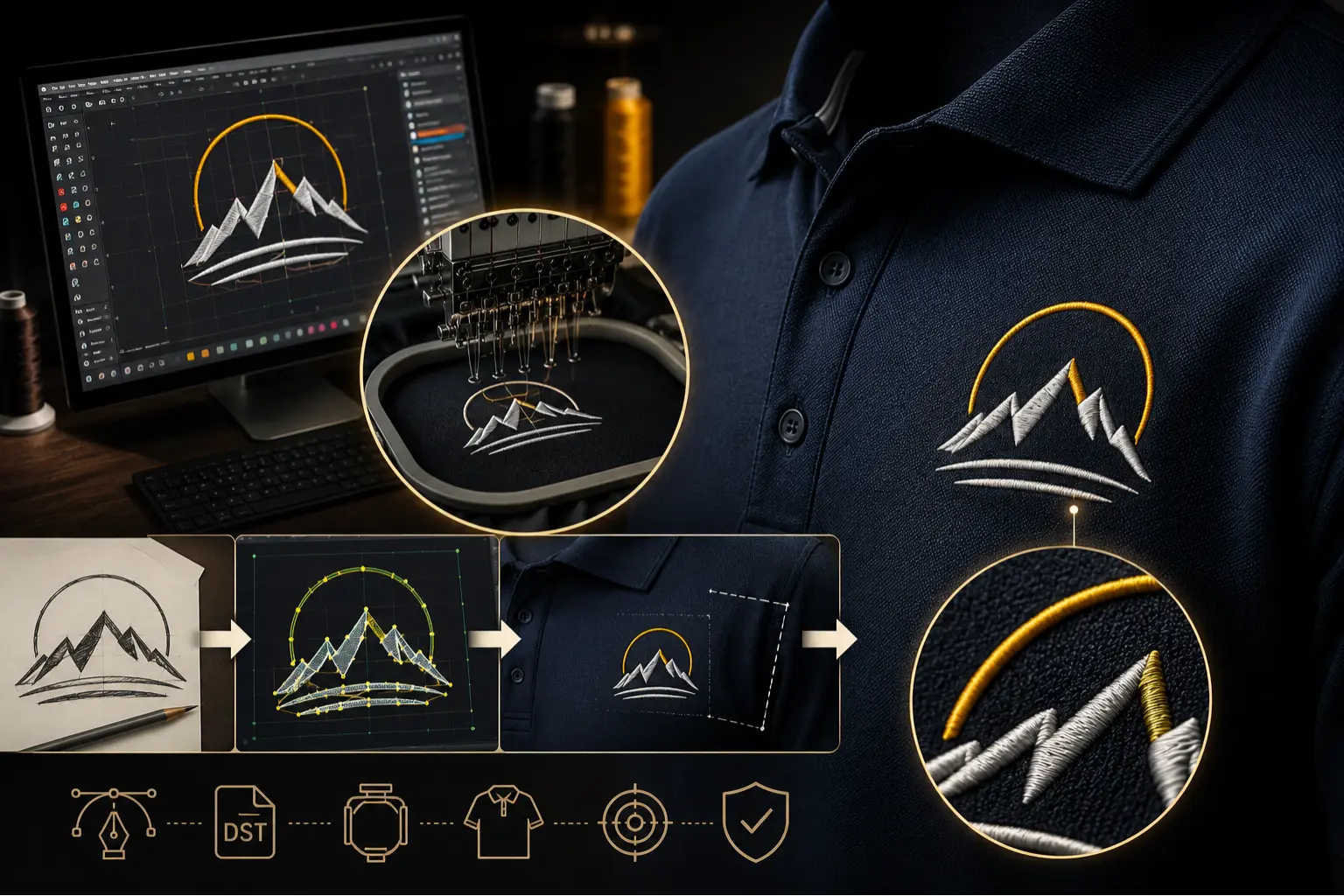
Left chest embroidery is one of the most popular and widely used embroidery applications in the apparel industry. From corporate uniforms and polo shirts to workwear, promotional apparel, and team clothing, left chest logos provide a professional and polished appearance that helps businesses strengthen their brand identity.
However, achieving clean, sharp, and professional-looking left chest embroidery requires much more than simply resizing a logo and converting it into an embroidery file. Because left chest logos are relatively small, every stitch must be carefully planned and optimized to maintain clarity, readability, and durability.
In this complete guide, we will explore everything you need to know about left chest logo digitizing, including sizing standards, stitch techniques, common challenges, and professional digitizing practices that ensure outstanding embroidery results.
What Is Left Chest Logo Digitizing?
Left chest logo digitizing is the process of converting a company logo, emblem, or artwork into a machine-readable embroidery file specifically optimized for embroidery placement on the left chest area of garments.
Professional digitizers create embroidery files that account for:
- Logo size limitations
- Small text readability
- Fabric behavior
- Stitch density
- Underlay structure
- Pull compensation
- Production efficiency
The goal is to create an embroidery file that stitches cleanly while maintaining the logo’s visual identity.
Why Left Chest Embroidery Is So Popular
Left chest embroidery is considered the standard placement for branded apparel.
It is commonly used on:
- Polo shirts
- Dress shirts
- Corporate uniforms
- Workwear
- Jackets
- Safety apparel
- Hospitality uniforms
- School uniforms
- Team apparel
This location offers excellent visibility while maintaining a professional appearance.
Because the embroidery area is relatively small, digitizing becomes especially important for preserving detail and readability.
Standard Left Chest Logo Size
One of the most common questions customers ask is:
What Size Should a Left Chest Logo Be?
The typical left chest embroidery size ranges between:
- Width: 3.0″ to 4.0″
- Height: 2.0″ to 4.0″
The most common size used in the embroidery industry is approximately:
3.5 inches wide
This size provides enough space for logo details while maintaining a balanced appearance on the garment.
The exact dimensions depend on:
- Logo shape
- Text size
- Garment type
- Customer preference
Professional digitizers often adjust logo proportions to achieve the best embroidery results rather than simply scaling the artwork.
Why Left Chest Logo Digitizing Requires Special Attention
Many logos are originally designed for print, web, or signage applications.
These logos often contain:
- Tiny text
- Thin lines
- Gradients
- Shadows
- Complex details
While these elements may look great on a screen, they often do not translate well into embroidery.
A professional digitizer must adapt the artwork to work within the physical limitations of thread and fabric.
This process involves balancing visual accuracy with embroidery performance.
The Challenges of Left Chest Logo Embroidery
Small Design Area
The limited embroidery area creates several challenges.
Design elements become smaller, making it difficult to reproduce:
- Fine lines
- Small lettering
- Detailed graphics
- Intricate shapes
Without proper digitizing, these elements can become distorted or unreadable.
Text Readability
Small text is one of the most common problems in left chest embroidery.
Many logos include:
- Company names
- Taglines
- Website addresses
- Slogans
When reduced to left chest size, some text may become too small to stitch clearly.
Professional digitizers modify lettering to improve readability while maintaining the overall brand appearance.
Fabric Movement
Garments naturally stretch, shift, and react during embroidery.
Common issues include:
- Pulling
- Puckering
- Distortion
- Misalignment
Proper digitizing techniques help compensate for these fabric behaviors.
Artwork Preparation for Left Chest Digitizing
Successful digitizing begins with high-quality artwork.
The best formats include:
- AI
- EPS
- SVG
- High-resolution PNG
Vector artwork provides clean edges and allows digitizers to accurately analyze logo details.
Low-resolution images often require manual recreation before digitizing can begin.
Simplifying Complex Logos
Not every logo can be embroidered exactly as it appears in print.
Professional digitizers often simplify certain elements to improve stitch quality.
Examples include:
Removing Extremely Small Details
Tiny decorative elements may disappear when embroidered at left chest size.
Enlarging Small Text
Lettering may need adjustment to remain readable.
Eliminating Gradients
Embroidery uses thread rather than ink, making gradients difficult to reproduce.
Combining Similar Elements
Overly complex sections may be simplified while maintaining overall brand recognition.
The objective is to create the best possible embroidered version of the logo.
Choosing the Right Stitch Types
Professional left chest digitizing relies heavily on proper stitch selection.
Satin Stitches
Satin stitches are commonly used for:
- Text
- Borders
- Narrow logo elements
Advantages include:
- Smooth appearance
- Excellent detail
- Professional shine
Fill Stitches
Fill stitches are used for:
- Larger areas
- Background shapes
- Solid logo sections
Advantages include:
- Durable coverage
- Stable embroidery
- Better support for large elements
Running Stitches
Running stitches are ideal for:
- Fine details
- Outlines
- Decorative accents
A professional digitizer combines these stitch types strategically to maximize clarity and efficiency.
The Importance of Underlay
Underlay stitches form the foundation of embroidery.
For left chest logos, underlay is especially important because it:
- Stabilizes fabric
- Improves coverage
- Reduces distortion
- Enhances edge definition
Without proper underlay, embroidery can appear uneven or poorly defined.
Professional digitizers customize underlay based on:
- Fabric type
- Design complexity
- Stitch type
Understanding Pull Compensation
Thread naturally pulls fabric inward during embroidery.
This phenomenon can cause:
- Narrow lettering
- Distorted shapes
- Uneven outlines
Pull compensation adds slight adjustments to design elements before stitching.
When properly applied, the finished embroidery matches the intended artwork dimensions.
This is particularly important for:
- Small text
- Thin columns
- Detailed logos
Managing Stitch Density
Stitch density refers to the spacing between stitches.
Density must be carefully balanced.
Excessive Density Can Cause:
- Thread breaks
- Needle breaks
- Fabric puckering
- Bulky embroidery
Insufficient Density Can Cause:
- Poor coverage
- Visible fabric
- Weak embroidery
Professional digitizers optimize density for each specific design and fabric combination.
Best Practices for Left Chest Logo Digitizing
Prioritize Readability
The primary objective is creating embroidery that can be easily recognized from a distance.
Minimize Excessive Detail
Small details often create production problems without adding significant visual value.
Optimize Stitch Pathing
Efficient stitch sequencing reduces:
- Thread trims
- Machine movement
- Production time
Test on Actual Garments
Professional digitizers frequently run test sew-outs before final production.
This helps identify:
- Registration issues
- Density problems
- Fabric reactions
before large production runs begin.
Common Left Chest Digitizing Mistakes
Many embroidery issues can be traced back to poor digitizing.
Common mistakes include:
Using Auto-Digitized Files
Automatically generated files often lack proper optimization.
Keeping Text Too Small
Unreadable lettering is one of the most frequent problems in left chest embroidery.
Excessive Stitch Density
Too many stitches create bulky, distorted embroidery.
Ignoring Fabric Type
Different garments require different digitizing approaches.
Poor Stitch Sequencing
Inefficient stitch paths increase production time and reduce quality.
Fabrics Commonly Used for Left Chest Embroidery
Polo Shirts
The most common application for left chest logos.
Corporate Dress Shirts
Require precise digitizing because of thinner fabrics.
Jackets
Often require adjustments for thicker materials.
Workwear
Heavy-duty fabrics may require different underlay and density settings.
Performance Apparel
Stretch fabrics demand specialized digitizing techniques to prevent distortion.
Why Professional Left Chest Digitizing Matters
A company logo represents a brand.
Poor embroidery can negatively impact:
- Brand perception
- Customer confidence
- Professional appearance
Professional digitizing ensures:
- Sharp lettering
- Clean edges
- Balanced stitch density
- Consistent production quality
This helps businesses maintain a polished and professional image across all embroidered apparel.
Benefits of Professional Left Chest Logo Digitizing
Businesses that invest in professional digitizing benefit from:
- Higher embroidery quality
- Better logo clarity
- Reduced thread breaks
- Faster production
- Lower production costs
- Consistent results
- Greater customer satisfaction
These advantages become even more important when producing large quantities of uniforms or branded apparel.
Final Thoughts
Left chest logo digitizing is one of the most specialized areas of embroidery digitizing. Because logos must fit within a relatively small embroidery area, every stitch must be carefully planned to maintain readability, accuracy, and professional appearance.
From proper stitch selection and density control to underlay optimization and pull compensation, professional digitizing plays a crucial role in the success of left chest embroidery projects.
Whether you need corporate uniforms, workwear, promotional apparel, or branded merchandise, investing in professional left chest logo digitizing ensures your logo looks clean, sharp, and production-ready on every garment.
At MAS Digitizing, we specialize in high-quality left chest logo digitizing services that deliver precise, professional embroidery files optimized for superior stitch quality and efficient production.