Blog
Stitch Types in Embroidery Digitizing: Satin, Fill, and Running Stitches

Embroidery digitizing is much more than simply converting artwork into a machine-readable file. One of the most important decisions a digitizer makes is selecting the correct stitch type for each element of a design. The quality, appearance, durability, and efficiency of an embroidery project depend heavily on how stitch types are used.
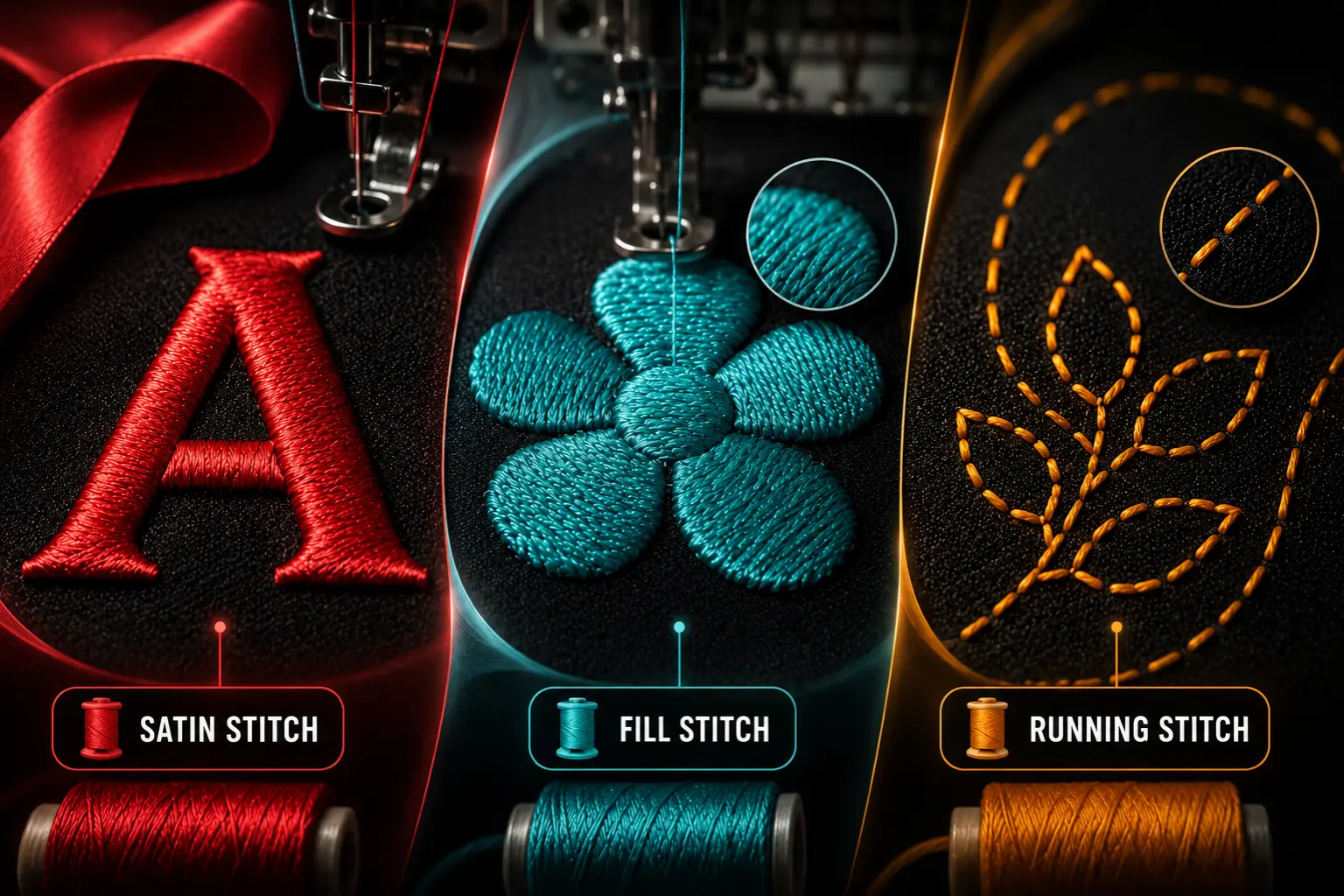
The three primary stitch types used in professional embroidery digitizing are Satin Stitches, Fill Stitches, and Running Stitches. Each stitch serves a specific purpose and performs best under certain conditions. Understanding these stitch types is essential for achieving clean, professional embroidery results.
In this comprehensive guide, we’ll explore how satin, fill, and running stitches work, their advantages and limitations, and how professional digitizers use them to create high-quality embroidery designs.
Why Stitch Types Matter in Embroidery Digitizing
Every embroidery design contains different elements, including text, outlines, logos, shapes, and decorative details. Using a single stitch type for every element would result in poor coverage, excessive thread usage, and reduced design quality.
Professional digitizers carefully select stitch types based on:
- Design size
- Fabric type
- Design complexity
- Stitch direction
- Production requirements
- Machine capabilities
Choosing the correct stitch type improves:
- Design clarity
- Stitch quality
- Production efficiency
- Durability
- Visual appeal
A well-digitized embroidery file often combines multiple stitch types to achieve the best possible result.
What Is a Satin Stitch?
A satin stitch is one of the most commonly used stitch types in embroidery digitizing. It consists of long, closely spaced stitches that move back and forth across a narrow area, creating a smooth and glossy appearance.
Characteristics of Satin Stitches
- Smooth surface finish
- High thread shine
- Excellent detail visibility
- Clean edge definition
- Professional appearance
Because embroidery thread reflects light, satin stitches often produce the attractive shine associated with premium embroidery.
Where Satin Stitches Are Used
Satin stitches are ideal for narrow design elements, including:
Lettering and Text
Most embroidered text is created using satin stitches because they produce:
- Sharp edges
- Excellent readability
- Smooth finishes
This is especially important for company logos, uniforms, and promotional apparel.
Borders and Outlines
Satin stitches create clean and precise borders around embroidery designs.
Small Logo Elements
Narrow shapes and detailed logo components often benefit from satin stitching due to its excellent detail retention.
Monograms
Monogram embroidery frequently relies on satin stitches because of their elegant appearance and thread shine.
Advantages of Satin Stitches
Premium Appearance
Satin stitches create a professional, high-end look with excellent thread reflection.
Superior Detail
Fine details remain clear and visible when properly digitized.
Smooth Texture
The stitch surface appears smooth and polished, making designs look more refined.
Excellent for Small Text
Satin stitches provide better readability than fill stitches in smaller lettering applications.
Limitations of Satin Stitches
Although satin stitches are highly effective, they have limitations.
Not Suitable for Large Areas
Large satin sections may cause:
- Thread looping
- Snagging
- Distortion
- Uneven coverage
Higher Risk of Pulling
Long stitches are more susceptible to snagging during regular wear.
Width Restrictions
Generally, satin stitches perform best within a specific width range. Extremely wide satin columns often require conversion to fill stitches.
What Is a Fill Stitch?
Fill stitches, sometimes called tatami stitches, are used to cover larger areas of a design with rows of interconnected stitches.
Unlike satin stitches, fill stitches use shorter stitch patterns arranged in various angles and directions to create complete coverage.
Fill stitches form the foundation of many large embroidery designs.
Characteristics of Fill Stitches
- Excellent coverage
- Durable structure
- Suitable for large areas
- Reduced snagging risk
- Flexible stitch patterns
Fill stitches can be customized with different patterns, textures, and angles to create unique visual effects.
Where Fill Stitches Are Used
Large Logo Areas
When a design contains large solid sections, fill stitches provide efficient coverage without excessive stitch lengths.
Background Elements
Many embroidered backgrounds use fill stitching to create a consistent appearance.
Patches and Emblems
Embroidered patches frequently rely on fill stitches to create durable coverage.
Decorative Patterns
Fill stitches can be programmed to create interesting textures and effects within a design.
Advantages of Fill Stitches
Excellent Fabric Coverage
Fill stitches effectively cover large areas without exposing the fabric underneath.
Greater Durability
The shorter stitch structure reduces the risk of snagging and damage.
Flexible Design Options
Digitizers can modify:
- Stitch angle
- Pattern style
- Density
- Direction
to achieve different visual effects.
Better for Large Designs
Large embroidered sections remain stable and balanced when digitized using fill stitches.
Limitations of Fill Stitches
Less Shine
Because the stitches are shorter, fill areas generally reflect less light than satin stitches.
Reduced Detail
Small details may not appear as crisp as satin-stitched elements.
Increased Stitch Count
Large fill areas often generate higher stitch counts, increasing production time.
What Is a Running Stitch?
Running stitches are the simplest stitch type used in embroidery digitizing.
A running stitch consists of a continuous line of stitches following a path or outline.
Despite their simplicity, running stitches play an essential role in professional embroidery.
Characteristics of Running Stitches
- Lightweight structure
- Minimal thread usage
- Fine detail capability
- Fast machine operation
- Clean line creation
Running stitches can vary in length depending on design requirements.
Where Running Stitches Are Used
Fine Details
Running stitches are ideal for:
- Facial features
- Small decorative details
- Fine line artwork
Outlines
Many embroidery designs use running stitches to define edges and improve visual separation.
Decorative Elements
Lightweight decorative accents often rely on running stitches.
Underlay Stitches
Many underlay structures use running stitches to stabilize the fabric before top stitching begins.
Advantages of Running Stitches
Excellent Detail Retention
Very fine elements can be embroidered accurately using running stitches.
Faster Production
Running stitches require less thread and machine time.
Lower Stitch Count
Designs remain efficient while maintaining visual detail.
Lightweight Embroidery
Running stitches add minimal bulk to the garment.
Limitations of Running Stitches
Limited Coverage
Running stitches do not fill areas or provide significant fabric coverage.
Less Visual Impact
Because they use less thread, running stitches are generally less noticeable than satin or fill stitches.
Not Suitable for Large Areas
They cannot replace fill stitches when full coverage is needed.
How Professional Digitizers Combine Stitch Types
The best embroidery designs rarely use a single stitch type.
Professional embroidery digitizers combine satin, fill, and running stitches strategically to maximize quality and efficiency.
For example:
Corporate Logo
- Text: Satin stitches
- Large shapes: Fill stitches
- Fine details: Running stitches
Sports Team Emblem
- Main background: Fill stitches
- Team name: Satin stitches
- Outline accents: Running stitches
Embroidered Patch
- Patch body: Fill stitches
- Lettering: Satin stitches
- Detail work: Running stitches
This combination creates a balanced design that looks professional while running efficiently on embroidery machines.
Factors That Influence Stitch Type Selection
Professional digitizers consider several factors before assigning stitch types.
Design Size
Small elements often require satin or running stitches, while larger areas benefit from fill stitches.
Fabric Type
Different fabrics react differently to embroidery. Stitch types must be adjusted to account for fabric behavior.
Thread Type
Thread thickness and material influence stitch performance and appearance.
Machine Capability
Different embroidery machines may perform better with specific stitch structures.
Production Requirements
Commercial embroidery operations often prioritize both quality and production efficiency.
Common Mistakes When Choosing Stitch Types
Poor stitch selection can create serious embroidery problems.
Common mistakes include:
- Using satin stitches for large areas
- Using fill stitches for small lettering
- Overusing running stitches
- Ignoring fabric characteristics
- Excessive stitch density
These mistakes can lead to:
- Distorted designs
- Thread breaks
- Poor readability
- Fabric puckering
- Longer production times
Why Stitch Knowledge Is Essential for Quality Digitizing
Embroidery software can automatically generate stitches, but software alone cannot determine the best stitch type for every design element.
Experienced digitizers understand how stitch types interact with:
- Fabric
- Thread
- Machine settings
- Design complexity
This expertise allows them to create embroidery files that produce cleaner, sharper, and more durable embroidery.
Final Thoughts
Understanding satin stitches, fill stitches, and running stitches is fundamental to professional embroidery digitizing. Each stitch type serves a unique purpose and contributes to the overall appearance, durability, and efficiency of an embroidery design.
Satin stitches provide smooth, high-quality finishes for text and narrow elements. Fill stitches deliver excellent coverage for larger areas and backgrounds. Running stitches add detail, outlines, and lightweight decorative effects.
When used correctly, these stitch types work together to create embroidery designs that look professional, stitch efficiently, and maintain their quality over time.
At MAS Digitizing, our experienced digitizers carefully select and optimize stitch types for every design, ensuring clean, production-ready embroidery files that deliver outstanding embroidery results on every project.