Blog
How Custom Embroidery Digitizing Improves Stitch Quality and Production Efficiency

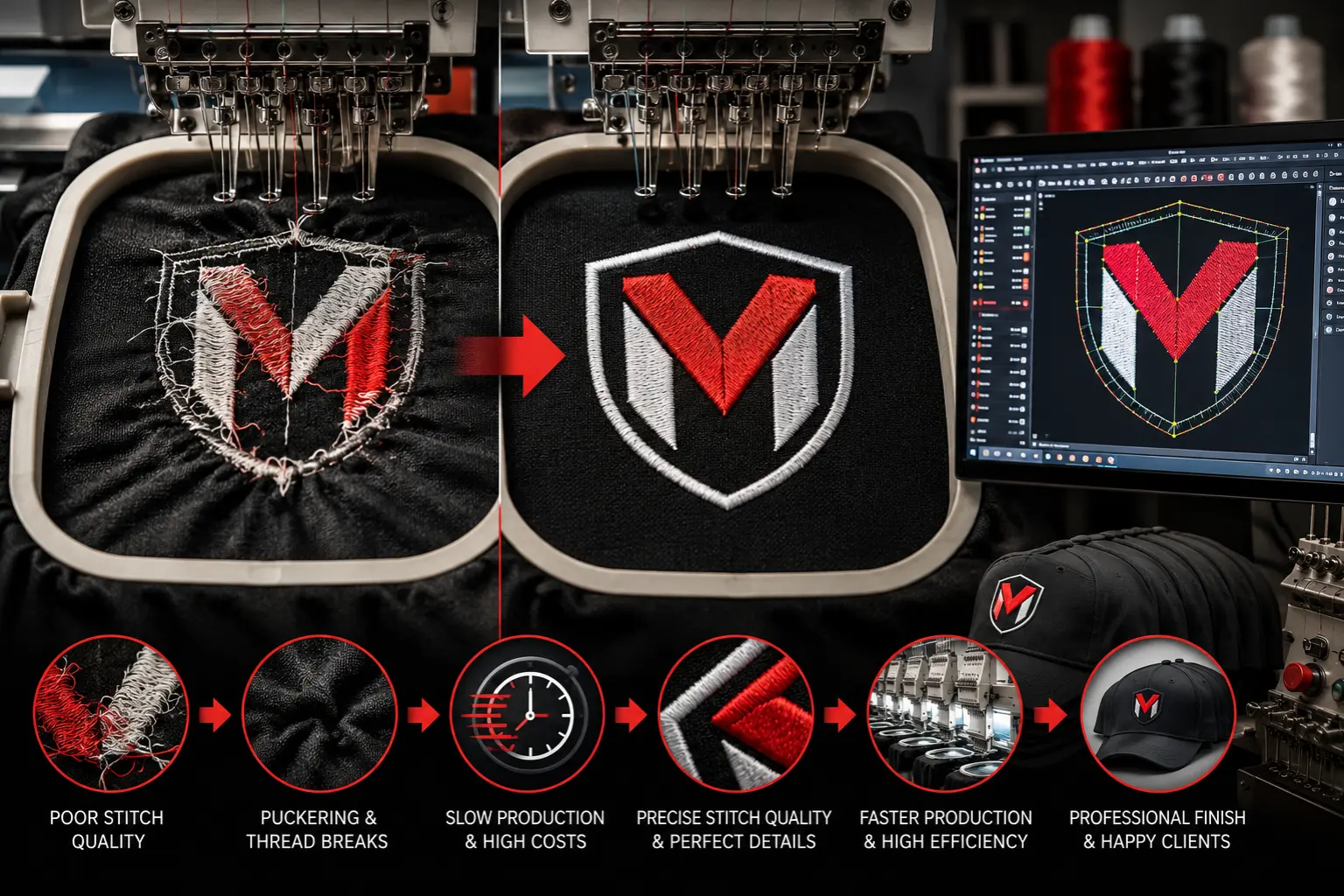
Embroidery quality depends on much more than a good machine and quality thread. At the heart of every successful embroidery project is a properly digitized embroidery file. While automatic digitizing software can create basic embroidery files, custom embroidery digitizing remains the gold standard for achieving superior stitch quality, clean designs, and efficient production.
Professional custom embroidery digitizing transforms artwork into a machine-readable embroidery file that is specifically optimized for the design, fabric, garment type, and embroidery machine being used. This careful process helps eliminate common embroidery problems while improving overall production efficiency.
In this guide, we will explore how custom embroidery digitizing improves stitch quality, reduces production issues, and delivers better embroidery results for businesses, apparel brands, promotional product companies, and embroidery shops.
What Is Custom Embroidery Digitizing?
Custom embroidery digitizing is the process of manually converting artwork, logos, or designs into embroidery files using specialized digitizing software and professional expertise.
Unlike auto-digitizing tools that automatically generate stitches, professional digitizers carefully plan every aspect of the embroidery design, including:
- Stitch types
- Stitch direction
- Stitch density
- Underlay stitches
- Pull compensation
- Stitch sequencing
- Fabric considerations
The result is a production-ready embroidery file that produces clean, accurate, and efficient stitching on the embroidery machine.
Why Stitch Quality Matters in Embroidery
Embroidery quality directly impacts the appearance, durability, and professionalism of the finished product.
Poor stitch quality can lead to:
- Thread breaks
- Gaps in embroidery
- Distorted designs
- Uneven lettering
- Fabric puckering
- Excessive thread trims
- Increased machine downtime
These issues not only affect the final appearance but also increase production costs and reduce customer satisfaction.
Custom embroidery digitizing helps eliminate these problems before production begins.
How Custom Embroidery Digitizing Improves Stitch Quality
1. Optimized Stitch Types for Every Design
Different design elements require different stitch types.
Professional digitizers carefully select the most appropriate stitch for each section:
Satin Stitches
Ideal for:
- Text
- Borders
- Small details
Fill Stitches
Ideal for:
- Large areas
- Solid shapes
- Background elements
Running Stitches
Ideal for:
- Fine details
- Outlines
- Small decorative elements
Using the correct stitch type improves design clarity, coverage, and durability.
2. Proper Stitch Density Control
Stitch density refers to how closely stitches are placed together.
Too much density can cause:
- Thread breaks
- Needle breaks
- Bulky embroidery
- Fabric distortion
Too little density can result in:
- Poor coverage
- Visible fabric underneath
- Weak embroidery
Custom embroidery digitizers adjust stitch density based on:
- Fabric type
- Thread type
- Design complexity
- Embroidery size
This creates smooth, balanced embroidery with excellent coverage and durability.
3. Better Underlay Stitching
Underlay stitches form the foundation of embroidery.
A properly digitized design includes underlay that:
- Stabilizes the fabric
- Improves stitch coverage
- Prevents shifting
- Enhances design definition
Auto-digitized files often use generic underlay settings that fail to support the design properly.
Custom digitizing ensures the correct underlay is applied for maximum stitch quality.
4. Effective Pull Compensation
During embroidery, stitches naturally pull the fabric inward.
Without compensation, designs may appear:
- Narrower than intended
- Distorted
- Uneven
Professional digitizers apply pull compensation to offset these effects and maintain accurate design dimensions.
This is especially important for:
- Small text
- Detailed logos
- Narrow columns
- Fine outlines
5. Improved Lettering Quality
Text is one of the most challenging elements in embroidery.
Poor digitizing often causes:
- Closed letter openings
- Uneven spacing
- Distorted characters
- Unreadable small text
Custom embroidery digitizing optimizes every letter individually, ensuring:
- Clean edges
- Proper spacing
- Maximum readability
- Professional appearance
This is particularly important for company logos, uniforms, and branded apparel.
How Custom Embroidery Digitizing Improves Production Efficiency
High-quality embroidery is only one part of the equation. Production efficiency is equally important for embroidery businesses.
1. Reduced Thread Breaks
Thread breaks are one of the most common causes of production delays.
Custom digitized files minimize thread breaks by:
- Optimizing stitch density
- Improving stitch flow
- Reducing excessive penetration points
- Eliminating unnecessary overlaps
Fewer thread breaks mean faster production and less machine downtime.
2. Faster Machine Operation
Well-digitized embroidery files run more efficiently because they contain:
- Logical stitch paths
- Fewer unnecessary trims
- Better stitch sequencing
- Reduced machine movements
This allows embroidery machines to complete jobs faster while maintaining excellent quality.
3. Lower Production Costs
Efficient embroidery files reduce:
- Machine operating time
- Labor costs
- Thread consumption
- Machine wear and tear
Over hundreds or thousands of garments, these savings can become substantial.
4. Fewer Production Errors
Poor digitizing often leads to costly production mistakes.
Examples include:
- Misaligned embroidery
- Design distortion
- Registration issues
- Fabric puckering
Custom embroidery digitizing helps identify and eliminate these issues before production begins.
5. Consistent Results Across Multiple Runs
Businesses often need hundreds or thousands of embroidered items with identical results.
Custom digitized files ensure:
- Consistent stitch quality
- Uniform design appearance
- Reliable production performance
This consistency is essential for corporate uniforms, promotional products, sportswear, and branded merchandise.
Why Auto Digitizing Cannot Match Custom Digitizing
Auto-digitizing software has improved significantly, but it still lacks human expertise.
Auto-digitizing programs cannot fully understand:
- Fabric behavior
- Stitch interaction
- Complex logo structures
- Production requirements
- Machine limitations
As a result, automatically generated files often require extensive manual editing before they are production-ready.
Professional custom digitizers analyze each design individually and make adjustments based on real-world embroidery experience.
This level of precision simply cannot be replicated by automated software alone.
Industries That Benefit from Custom Embroidery Digitizing
Custom embroidery digitizing is valuable for many industries, including:
Corporate Apparel
- Company uniforms
- Employee shirts
- Promotional clothing
Sports Teams
- Jerseys
- Team apparel
- Athletic merchandise
Fashion Brands
- Custom clothing
- Designer collections
- Premium embroidery applications
Promotional Products
- Branded merchandise
- Marketing giveaways
- Corporate gifts
Small Embroidery Businesses
- Contract embroidery
- Local embroidery services
- Home-based embroidery operations
Choosing a Professional Embroidery Digitizing Service
When selecting a digitizing provider, look for:
- Experienced digitizers
- Manual digitizing expertise
- Fast turnaround times
- Quality control processes
- Multiple embroidery file format support
- Revision options
- Production-ready files
A skilled digitizing service can dramatically improve both embroidery quality and production efficiency.
Final Thoughts
Custom embroidery digitizing plays a critical role in achieving professional embroidery results. By carefully optimizing stitch types, density, underlay, pull compensation, and stitch sequencing, professional digitizers create embroidery files that produce cleaner designs and more efficient production runs.
Compared to auto-digitized files, custom embroidery digitizing offers superior stitch quality, fewer production issues, reduced machine downtime, and greater consistency across large embroidery projects.
Whether you are producing company uniforms, promotional products, fashion apparel, or custom merchandise, investing in professional embroidery digitizing is one of the most effective ways to improve embroidery quality and maximize production efficiency.
At MAS Digitizing, we specialize in high-quality custom embroidery digitizing services that help businesses and embroidery professionals achieve clean, precise, and production-ready embroidery results every time.